


Stories Behind the Frames
Updated: Jul 13
Design, Craftsmanship & the Thinking Behind Each Piece
Framing is often seen as the final step, the border placed around artwork once everything else is complete. In reality, framing is part of the creative process itself. It shapes how a piece is viewed, understood, and preserved.
Every project presents a unique design challenge. From dimensional objects to portrait studies, from bold graphic compositions to subtle texture integration, the decisions behind each frame are deliberate and measured.
The works above reflect different approaches, but they share one consistent philosophy.
Movement & Space

This piece immediately suggests motion and space. The framing approach needed to support that sense of lift and isolation without overpowering it.
Deep blue tones were selected to echo the emotional atmosphere of the artwork. Layered mats create dimensional separation, allowing the central figure to feel suspended rather than confined.
Negative space plays an important role here. Instead of crowding the image, the frame enhances the feeling of distance and movement.
Sometimes the strongest design decision is allowing space to speak.
Navajo Squash Blossom Necklace

Framing dimensional jewelry requires structural precision.
This shadowbox design ensures:
Secure mounting
Balanced weight distribution
Future accessibility
Visual clarity
The background textile was selected to support, not compete. Depth spacing prevents tension on the piece while maintaining clean presentation.
Engineering and aesthetics must work together in dimensional framing.
Historical Portrait Study: Aunt Etta
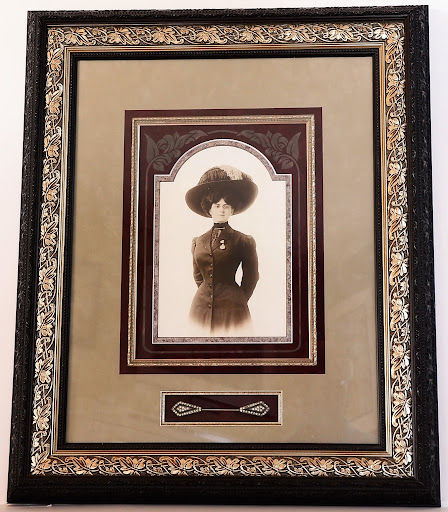
This early competition piece emphasizes proportion and era sensitivity.
Layered matting and traditional moulding profiles were selected to reflect historical character. The goal was balance, strong enough to frame with authority, restrained enough to preserve dignity.
Precision in proportion defines this design.
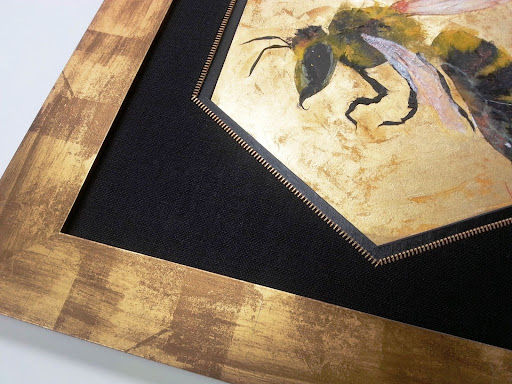
The Bee: Geometry & Texture Exploration

Inspired by honeycomb structure, this design uses hexagonal geometry to echo subject matter.
Layering introduces inward movement. Metallic warmth enhances cohesion. An unexpected zipper detail adds contrast, merging industrial texture with organic imagery.
The detail image highlights how surface choices contribute to overall harmony.
Madonna Collector’s Album: Translating Visual Energy

Bold color and repetition define this piece.
Circular openings, layered matting, and saturated tones reflect strong visual identity. Rather than flattening memorabilia, depth and structure elevate presentation.
Color psychology and rhythm guide the design.
The Diver: Dimensional Concept Framing

This competition piece integrates structure with conceptual depth.
Layered construction enhances dimensional illusion. Metallic textures introduce tension and weight. The frame becomes part of the narrative architecture rather than a border.
Depth control is central to this design.
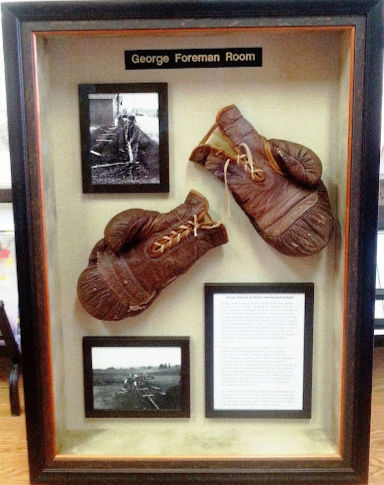
Memorabilia Preservation, Object Study

These images show the transformation from object to presentation.
When framing sports memorabilia, structural support and conservation are critical. The shadowbox was engineered to distribute weight evenly while allowing the gloves to appear suspended.
Context elements were arranged to balance visual hierarchy without overcrowding.
The before and after perspective demonstrates how framing shapes perception.
Surface Treatment & Detail


This piece emphasizes texture integration.
The moulding finish was treated to echo the surface quality of the artwork. Subtle distressing and tonal control create cohesion between frame and subject.
The detail image highlights craftsmanship and material handling.
Portrait Studies: Understanding the Subject

Not every image in the studio begins framed.
These portrait studies represent the starting point of the design process. Before moulding or matting is selected, the subject must be understood.
When working with portrait photography, framing decisions are guided by:
Emotional tone
Lighting direction
Color temperature
Facial focal points
Negative space within the composition
Strong framing begins with careful observation. The goal is always to enhance the subject without altering its integrity.
These images reflect the importance of studying the artwork before any structural choices are made.

Typography & Written Presentation
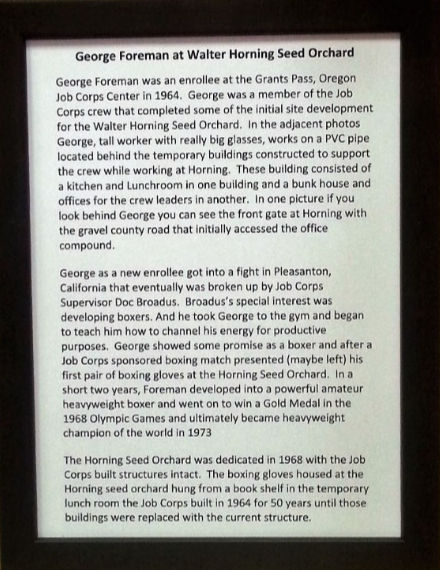
Framing written content requires a different design approach than imagery.
Typography introduces alignment, spacing, and readability considerations. The frame must support clarity rather than add distraction.
Mat selection, border proportion, and moulding profile were chosen to:
Maintain legibility
Create visual authority
Prevent visual compression
Text-based pieces rely heavily on spacing discipline. Simplicity often delivers the strongest impact
Material Selection & Profile Study.

Before a frame is ever assembled, material testing happens.
This image shows moulding widths and profiles placed together for comparison. Scale, depth, and finish must be evaluated side-by-side to determine visual weight and compatibility.
Design decisions at this stage influence:
Balance
Structural stability
Overall proportion
Surface harmony
The right moulding profile can transform a piece. Selection is never random, it is measured and intentional.
The Design Philosophy
Across all projects, core considerations remain consistent:
Structural integrity
Material compatibility
Conservation standards
Depth control
Visual hierarchy
Surface treatment
Framing is both engineering and interpretation working together. It influences how artwork is experienced while protecting it for the future.
Many of the most important decisions are invisible, hidden within spacing calculations, mounting methods, or proportion adjustments. Yet those unseen choices are what create balance, stability, and cohesion.
Every finished piece reflects intentional design, where craftsmanship supports the story rather than competing with it.
If you’re exploring custom framing or looking to elevate a piece that matters to you, thoughtful design makes all the difference. The right frame doesn’t just surround artwork, it completes it.

Comments